▲
1
▼
The game originally had a flying cage carried by four winged creatures. Mario would start already in the cage and with an autoscroll script, the cage would move along the level. Although the cage can be found in the code, the graphics for it are incomplete. The cage is likely left over from the 'SNES Test Program'.
▲
1
▼
 Super Mario World was originally announced in 1988 as "Super Mario Bros. 4" in an interview with Nintendo president Hiroshi Yamauchi regarding the development of the Super Famicom. Not only was this over two years prior to the game's release, it was also announced two months prior to the Japanese release of its predecessor, Super Mario Bros. 3. While the game would receive the name Super Mario World when it was first previewed in July 1989, Super Mario Bros. 4 was still used as a subtitle in the game's Japanese promotional materials, box art and cartridge label. The subtitle was planned to be used on the title screen for the game, as there is an unused graphic for it in the game's ROM. Some commercials for the game used either that subtitle, or just "Super Mario Bros." instead. In all versions of the final game however, neither of these subtitles were used.
The Cutting Room Floor articles:
https://tcrf.net/Super_Mario_World_(SNES)/Unused_Graphics_%26_Objects#Super_Mario_Bros._4
https://tcrf.net/Prerelease:Super_Mario_World_(SNES)/Earlier_Build
Cartridge design:
https://www.youtube.com/watch?v=43lAIBr6-yc
Super Mario World assorted commercials with early subtitles:
https://www.youtube.com/watch?v=DkrExHAhY7U
TOUCH magazine interview with Hiroshi Yamauchi (issue #90, September 13, 1988) [Note: it appears this article mistakenly claims this interview was taken from an earlier issue of the magazine, despite using pages and pictures of Yamauchi from the September 13 issue]:
https://www.chrismcovell.com/secret/SFC_1988Q3.html
https://tcrf.net/Super_Mario_World_(SNES)/Unused_Graphics_%26_Objects#Super_Mario_Bros._4
https://tcrf.net/Prerelease:Super_Mario_World_(SNES)/Earlier_Build
Cartridge design:
https://www.youtube.com/watch?v=43lAIBr6-yc
Super Mario World assorted commercials with early subtitles:
https://www.youtube.com/watch?v=DkrExHAhY7U
TOUCH magazine interview with Hiroshi Yamauchi (issue #90, September 13, 1988) [Note: it appears this article mistakenly claims this interview was taken from an earlier issue of the magazine, despite using pages and pictures of Yamauchi from the September 13 issue]:
https://www.chrismcovell.com/secret/SFC_1988Q3.html
▲
1
▼
 The stage which is shown at the title screen is an unfinished version of the Special World level "Groovy".
▲
1
▼
 Early screenshots of the game show that Raccoon Mario was to return, before being replaced by Cape Mario. A raccoon leaf and a few Raccoon Mario sprites are also present among other early Super Mario World graphics found within the data of a SNES test cartridge, used by Nintendo to test and diagnose the consoles and controllers.
▲
1
▼
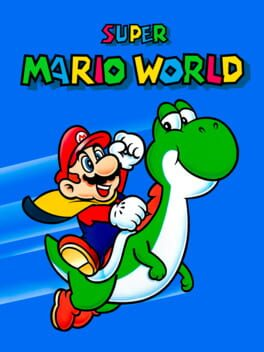
The game's ending shows Mario and Luigi with red and green shoes, despite the cover depicting Mario with brown shoes. Also, both Mario and Luigi wear brown shoes during game play.
subdirectory_arrow_right Super Mario All-Stars + Super Mario World (Game)
▲
1
▼
When the original Super Mario World game was released, Luigi was a recolored copy of Mario. In Super Mario All-Stars + Super Mario World, Luigi's sprites were redesigned to look different to distinguish the two.
▲
1
▼
 An unused 5-up logo can be found in the game's data. When used in game, the logo doesn't show up correctly. You can get a 5-up by bouncing on Wigglers, or by using a Game Genie code. It's fully coded, but the actual way the graphics are displayed is incorrect, as their properties are pulled from the code after the table with the score palettes. The 8x8 tiles used are incorrectly flipped horizontally and vertically.
subdirectory_arrow_right The Legend of Zelda (Franchise)
▲
1
▼
In the Japanese games, Super Mario World's "Forest of Illusion" and The Legend of Zelda's "Lost Woods" share the name, "Mayoi no Mori" (Lost Forest). All the standard exits in the Forest of Illusion send you around in circles, which is comparable to the Lost Woods circling you back to the entrance after a wrong turn.
▲
1
▼
According to former Nintendo of America localizer Dayvv Brooks, the Reznors fought at the end of Fortresses were named after Trent Reznor from the industrial rock band Nine Inch Nails, similar to how he named the Koopalings after famous musicians.
▲
1
▼
 In the Japanese version, Reznor's name is Bui Bui which is labeled on the wooden planks when you battle them in the fortresses. Bui Bui's name was changed to Reznor when the game was localized.
▲
1
▼
 If you play the last level of the special world in the Japanese version of the game, at the very end of the level a lot of coins will spell out "YOU ARE SUPER PLAYER !!". To fix any grammatical issues, the international version changed this to spell out "YOU ARE A SUPER PLAYER !!".
The Cutting Room Floor article:
http://tcrf.net/Super_Mario_World_(SNES)/Version_Differences#Funky
Legends of Localization article (link and image submitted by ZpaceJ0ck0):
https://legendsoflocalization.com/super-mario-worlds-radical-special-courses-in-japanese/
http://tcrf.net/Super_Mario_World_(SNES)/Version_Differences#Funky
Legends of Localization article (link and image submitted by ZpaceJ0ck0):
https://legendsoflocalization.com/super-mario-worlds-radical-special-courses-in-japanese/
▲
1
▼
 The grassy pond located half way up "Kappa Mountain", found near the start of the game on Yoshi's Island, is named after the mythological "Kappa" from Japanese folklore, which is often depicted with a small pool of water on its head. The name "Kappa Mountain" only appears in the game's instruction manual.
▲
1
▼
 The sleeping fish enemy, known as "Rip Van Fish", will typically chase down Mario upon being woken up. However, if Mario is under the effect of a star power-up, Rip Van Fish will make an effort to flee in the opposite direction of Mario instead.
subdirectory_arrow_right Super Mario World: Super Mario Advance 2 (Game)
▲
1
▼
In the SNES release, Yoshi's house has seven berries on it. In the Game Boy Advance release, there are ten berries.
▲
1
▼
 The game contains an unused sprite of the word "and", it's not known exactly where this would have appeared, but it was most likely intended to be used as part of the copyright text.
subdirectory_arrow_right Super Mario World: Super Mario Advance 2 (Game)
▲
1
▼
The international version has several changes to levels when compared to the Japanese release. These include minor graphical changes to fix mistakes or to provide more obvious information to the player, along with several changes to make the game slightly easier.
These changes are also present in the Game Boy Advance release.
These changes are also present in the Game Boy Advance release.
subdirectory_arrow_right Super Mario World: Super Mario Advance 2 (Game)
▲
1
▼
In the SNES game, the maximum number of lives a player could have is 99. In the Game Boy Advance game, this was changed to 999.
subdirectory_arrow_right Super Mario World: Super Mario Advance 2 (Game)
▲
1
▼
A status menu is accessible on the world map by pressing the Select button on the Game Boy Advance version. The status menu allows the player to see total play time, score, the number of exits found by each brother, whether Princess Peach has been saved, and whether all of Dragon coins have been collected.
After completing all exits on every level, a stage select screen will also become available that will take the player to any chosen level.
After completing all exits on every level, a stage select screen will also become available that will take the player to any chosen level.
subdirectory_arrow_right Super Mario World: Super Mario Advance 2 (Game)
▲
1
▼
In the SNES game, the "Top Secret Area" stage does not have a timer. In the Game Boy Advance game, the "Top Secret Area" has 200 seconds on the timer.
subdirectory_arrow_right Super Mario World: Super Mario Advance 2 (Game)
▲
1
▼
In the SNES game, the timer for Bowser's Castle is 400 seconds; there is no time limit when fighting Bowser. In the Game Boy Advance game, the timer was increased to 800 seconds if entering through the front door and 600 seconds if entering from the back door due to the timer continues when fighting Bowser.
Related Games
Super Princess Peach
New Super Mario Bros. U Deluxe
Wario Land: Super Mario Land 3
Super Mario Galaxy 2
Super Mario Bros.
New Super Mario Bros.
Yoshi's Safari
Super Mario 64
Super Mario Strikers
Paper Mario
Super Mario Spikers
Super Mario Bros.: The Lost Levels
Mario Superstar Baseball
Mario Tennis
Mario 128
Super Mario Bros. 3
Super Mario Bros. 2
New Super Mario Bros. Wii
Super Mario All-Stars
Super Mario Odyssey
Mario Party
Mario Artist: Paint Studio
Yoshi
Mario & Sonic at the Olympic Games
Super Mario Run
Super Mario Galaxy
Mario's Early Years! Fun with Letters
Super Mario Land 2: 6 Golden Coins
Captain Toad: Treasure Tracker
Super Mario Maker
New Super Luigi U
Mario & Wario
Super Mario Bros. Wonder: Nintendo Switch 2 Edition + Meetup in Bellabel Park
Super Mario Bros. Deluxe
Super Mario 64 DS
Mario's Tennis
Super Mario Land
New Super Mario Bros. U
Mario Hoops 3-on-3
Dance Dance Revolution Mario Mix
Mario Pinball Land
Super Mario Sunshine
Super Mario Galaxy
Dr. Mario
Mario Is Missing!
All Night Nippon Super Mario Bros.
Mario Sports Mix
Super Mario Bros. 35
Luigi's Mansion
Princess Peach: Showtime!