▲
1
▼
Unused victory sprites of Mario and Luigi facing the camera in each power-up form that the game has to offer can be found in the game's data.
subdirectory_arrow_right Super Mario Bros. 3 (Game)
▲
1
▼
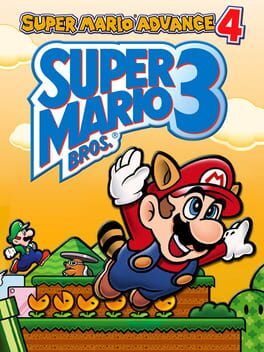
 Over 30 new levels were created for the Game Boy Advance release of the game, Super Mario Advance 4: Super Mario Bros 3. In order to access these new levels, the player requires an e-Reader for Game Boy Advance and the various e-Reader Level Cards. To transfer the levels, the player would require 2 Game Boy Advance systems, the e-Reader, a link cable, and a copy of the game. Because of this, these levels have mostly fallen into obscurity.
Only 10 Level Cards were released in North America, while the other 20 Level Cards were released in Japan.
When the game was re-released on the Wii U Virtual Console and Nintendo Switch Online, all 38 e-Reader levels were unlocked by default as the e-Reader was only supported for the Game Boy Advance.
▲
1
▼
 If a Muncher is hit with Raccoon Mario's tail attack, it will turn into a block. This trick carried over to the Super Mario All-Stars version, but not the GBA version, Super Mario Advance 4: Super Mario Bros. 3.
▲
1
▼
In the SNES and GBA remakes of the game (Super Mario All-Stars and Super Mario Advance 4), the creatures the Mushroom kings were transformed into were changed from regular animals, such as a dog or a spider, to creatures specific to the Mario series that don't otherwise appear within Super Mario Bros. 3.
subdirectory_arrow_right Super Mario Bros. 3 (Game)
▲
1
▼
Many changes were made when porting the game to the Game Boy Advance. The changes were made in order to make the game easier, and to accommodate for the system's smaller screen resolution. These changes include adding coins and power-ups, making jumps shorter and easier, and moving platforms so they could fit on the screen.
▲
1
▼
In the NES and SNES releases, the power-up "Kuribo's Shoe" is actually the Japanese name for the power-up, but it was left unchanged for their English releases. Kuribo is the Japanese name for Goomba, and this would later be corrected in the GBA release by naming it "Goomba's Shoe".
MarioWiki article:
http://www.mariowiki.com/Kuribo%27s_Shoe
SNES release:
https://www.youtube.com/watch?v=I-s3zAusOgE#t=2m20s
GBA release:
https://www.youtube.com/watch?v=RhCTkgmCqLE#t=16m8s
http://www.mariowiki.com/Kuribo%27s_Shoe
SNES release:
https://www.youtube.com/watch?v=I-s3zAusOgE#t=2m20s
GBA release:
https://www.youtube.com/watch?v=RhCTkgmCqLE#t=16m8s
subdirectory_arrow_right Super Mario Bros. 3 (Game)
▲
2
▼
 A popular long-standing fan theory about Super Mario Bros. 3 was that it was actually an elaborate stage play.
The commonly cited evidence that supports this theory include:
• The game's title screen starts with the rise of curtains, and the game ends with the fall of curtains, as well as curtain calls for each World and several characters during the end credits
• Some platforms are hanging down from the "sky" by wires implying it's scenery being hung from the ceiling
• Some platforms are bolted to the wall and cast shadows against the "sky" suggesting it's a backdrop
• If Mario/Luigi kneels on white block platforms for six seconds, he will fall behind them and can walk behind the scenery
• Some platforms are sticking out through carved-out slots in the backdrop suggesting they are being controlled by hidden machines behind the set
• Each regular stage ends by exiting stage left and going "backstage" into the dark goal area
• Every injury or death in a stage is Mario/Luigi messing up the scene (the "Mario was never once in any real danger" part in the attached image is not necessarily true as unintended injuries and deaths can happen in theatre)
One overlooked piece of circumstantial evidence that supports this theory concerns the fact that the Kings of each World that are transformed into different creatures by the Koopalings are never actually seen being transformed into creatures, or transforming back into humans after Mario defeats a Koopaling. The way every Koopaling defeat plays out shows Mario falling from the airship holding the King's magic wand, the scene fades to black, and then the lights come back up inside the castle showing the King already transformed back into a human before either the wand or Mario return to the castle. This suggests that the Kings were never transformed in the first place, because they were all actors waiting to get into place for their scenes, and the transformations are the suspension of disbelief. It should be noted that the Game Boy Advance version of the game partially discredits this by adding cutscenes showing each King being turned into creatures by the Koopalings, but they are still are not seen being transformed back into humans.
In a Q&A interview to promote the release of Super Mario Maker in 2015, Shigeru Miyamoto confirmed the theory, that the game was all a performance.
Shigeru Miyamoto Q&A interview:
https://www.youtube.com/watch?v=uu2DnTd3dEo
Kotaku article:
https://www.kotaku.com.au/2015/09/miyamoto-confirms-that-super-mario-bros-3-was-a-play/
Super Mario Bros. 3 transformations:
https://www.youtube.com/watch?v=Na8rqq47gi0?t=1148
Super Mario Advance 4: Super Mario Bros. 3 transformations:
https://www.youtube.com/watch?v=155_K0q9gAw
https://www.youtube.com/watch?v=Dx1SZ1FxeUo?t=33
https://www.youtube.com/watch?v=uu2DnTd3dEo
Kotaku article:
https://www.kotaku.com.au/2015/09/miyamoto-confirms-that-super-mario-bros-3-was-a-play/
Super Mario Bros. 3 transformations:
https://www.youtube.com/watch?v=Na8rqq47gi0?t=1148
Super Mario Advance 4: Super Mario Bros. 3 transformations:
https://www.youtube.com/watch?v=155_K0q9gAw
https://www.youtube.com/watch?v=Dx1SZ1FxeUo?t=33
Related Games
Yoshi's Island: Super Mario Advance 3
Super Mario World: Super Mario Advance 2
Super Mario Advance
Wrecking Crew
Yoshi's Cookie
Mario's Game Gallery
Mario Party Advance
Mario Kart 8
Mario & Luigi: Bowser's Inside Story
Mario & Sonic at the Olympic Winter Games
Mario & Wario
Super Smash Bros. for Nintendo 3DS
Mario's Time Machine
Paper Mario
Super Mario Maker
Super Mario Bros.: The Lost Levels
Super Mario 3D All-Stars
Wario's Woods
Donkey Kong: Original Edition
Luigi's Mansion
Super Mario Party
NES Remix
Mario Paint
Super Mario 3D World
Paper Mario: The Origami King
Donkey Kong
Mario Strikers Charged
Donkey Kong no Ongaku Asobi
Paper Mario: Color Splash
Yoshi
New Super Mario Bros. U Deluxe
All Night Nippon Super Mario Bros.
Mario Superstar Baseball
Mario & Sonic at the London 2012 Olympic Games
Super Mario Bros. Deluxe
Wario's Woods
Mario no Photopi
Mario Artist: Paint Studio
Mario & Luigi: Dream Team
Mario & Luigi: Paper Jam
Mario 128
Mario Artist: Polygon Studio
Super Mario Galaxy 2
Mario Party Superstars
New Super Mario Bros.
Super Mario 64
Super Mario 64 DS
Super Mario Galaxy
Super Smash Bros. Ultimate
Mario's Cement Factory