▲
1
▼
 Within the game's data is a set of unused sprites showing Sonic shrinking or falling away from the screen.
subdirectory_arrow_right Sega Smash Pack Volume 1 (Game)
▲
1
▼
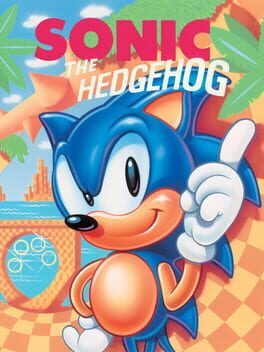
 Sonic's graphic on the title screen of Sonic the Hedgehog has a belly that is obscured by the logo's ribbon. This is a leftover of the animatic of Sonic's appearance on the title screen. On earlier, less accurate emulators, including Sega's own emulator made for Sega Smash Pack Volume 1 on Dreamcast, a common error would involve Sonic's belly hanging over the ribbon.
subdirectory_arrow_right Sega Top Ten (Game)
▲
1
▼
 In Sonic the Hedgehog, there is an unused "PRESS START BUTTON" graphic. This would eventually be used in an exclusive revision of the game included in the Sega Top Ten compilation cartridge for Brazil and Asia. This version of the game is otherwise identical to the original release.
▲
1
▼
The file header (the game's name used as an introduction for its code) for Sonic the Hedgehog is supposed to have a line break in the middle, so it reads as:
However, this line break was done through spaces instead of an actual line break, so if one plays Sonic the Hedgehog on an emulator that shows the file header name (such as Kega Fusion), it will instead read:
[Note: periods added due to VGFacts automatically removing multiple rows of spaces.]
SONIC THE
HEDGEHOG
HEDGEHOG
However, this line break was done through spaces instead of an actual line break, so if one plays Sonic the Hedgehog on an emulator that shows the file header name (such as Kega Fusion), it will instead read:
SONIC THE...............HEDGEHOG
[Note: periods added due to VGFacts automatically removing multiple rows of spaces.]
subdirectory_arrow_right Sonic & Knuckles (Game)
▲
1
▼
Connecting Sonic & Knuckles to the first Sonic the Hedgehog will not allow you to play as Knuckles in the latter game. This was not due to hardware limitations as is commonly believed, but rather because the game's development team felt that, while Sonic 2 was designed with Super Sonic's flight in mind and thus had verticality to its levels fit for Knuckles' climbing, Sonic 1 was not, and therefore simply was not fun to play as Knuckles in.
▲
1
▼
Hirokazu Yasuhara was going to go to America to establish a new development team but because of the Gulf war between Iran and Kuwait, his trip was delayed. Yuji Naka and Naoto Oshima noticed him being upset and decided to let him join their team temporarily until he leaves. He ended up staying for a year to design the levels for major games such as Sonic the Hedgehog.
▲
1
▼
In an early version of Sonic The Hedgehog shown in a pilot episode for the TV game-show "Nick Arcade", a rolling ball can be found towards the start of Green Hill Zone Act 1. This was removed from the game's final release.
▲
1
▼
 In the original international release, a short cut taken to the finish in the Labyrinth Zone would only allow the player to collect a total of 49 rings, missing 1 ring from going to the special stage. However, in the Japanese version, a ring was added so that people could get to the special stage if they went this way.
▲
1
▼
The Japanese version of the game has more parallax scrolling layers. An example would be that the clouds in some of the zones move across the screen, while the international version the clouds are stationary. The Labyrinth zone also has an underwater wave effect in the Japanese version. The only zones that were not changed were the Starlight zone and the Final zone.
▲
1
▼
In issue 260 of Nintendo Power, Yuji Naka revealed that the initial concept for Sonic the Hedgehog's gameplay came from playing level 1-1 of Super Mario Bros. over and over again as fast as he could, since you always had to play the level first regardless of whether you used warp zones or not.
"I always tried to get through the level as fast as I could. And that inspired the initial concept for Sonic the Hedgehog."
"I always tried to get through the level as fast as I could. And that inspired the initial concept for Sonic the Hedgehog."
▲
1
▼
 In the game's code there exists a sprite of a Goggle monitor, and some matching goggles to go with it. There is also an unused sprite of Sonic holding his breath, meaning these were likely once an underwater power up.
▲
1
▼
 Scrap Brain Zone was originally known as 'Clock Ork Zone'. It's believed the name was changed because it was planned to be called 'Clock Work Zone', but no 'W' existed in the game's zone title font.
▲
1
▼
 The Japanese band "Dreams Come True" are credited with composing the game's entire soundtrack. To promote their first tour, the band had concert posters with Sonic the Hedgehog on them, and painted Sonic on the side of their tour bus.
▲
1
▼
The game's soundtrack was composed on an Atari computer.
▲
1
▼
In early screenshots of the Genesis game, a UFO could be spotted, but was not present in the final game. Yet when Sonic the Hedgehog was released in 2005 for mobile phones, the UFO sprite was found hidden away in the files, but still unused.
▲
1
▼
 There are hidden embedded Japanese staff credits on the "Sonic Team Presents" screen. With the aid of a palette editor or cheat code, one can hide the title card and invert the colour of the background to make it visible.
▲
1
▼
 According to series developer Yuji Naka, the iconic "SE-GA" jingle at the beginning of the game took up 1/8 of the game's cartridge space.
▲
1
▼
 Sonic was originally going to be called 'Mr. Needlemouse', a literal translation from the Japanese word for hedgehog.
▲
1
▼
In Act 1 of Green Hill Zone, it is possible to die by going too fast. At a certain point in the stage, the camera may not be able to keep up with you when you dip downhill, causing the game to think that Sonic has fallen into a bottomless pit.
▲
1
▼
 There's footage of a proto-type build of Sonic in the background of the Noah's Arcade ad in Wayne's World. The footage shows UFOs in Marble Zone. These UFOs were removed from the final build of the game.
| keyboard_double_arrow_left keyboard_arrow_left | Page 1 of 2 | keyboard_arrow_right keyboard_double_arrow_right |
Related Games
Sonic Adventure
Sonic the Hedgehog 4: Episode II
Sonic Shuffle
Sonic Jam
Sonic & Knuckles
Sonic the Hedgehog 4: Episode I
Sonic Unleashed
Sonic DS
Team Sonic Racing
Sonic Runners
Sonic Advance 2
Knuckles' Chaotix
Sonic the Hedgehog's Gameworld
Sonic Adventure DX: Director's Cut
Sonic Rivals 2
Sonic Superstars
Sonic the Hedgehog
Sonic Unleashed
Sonic the Hedgehog: Spinball
Mario & Sonic at the Olympic Games
Sonic Chronicles: The Dark Brotherhood
Sonic Mania
The Murder of Sonic the Hedgehog
Sonic the Hedgehog Pocket Adventure
Sonic Generations
Sonic X-treme
Sonic Colors
Sonic 3D Blast
Sonic Advance
Sonic CD
Sonic Adventure DX: Director's Cut
Sonic Lost World
Sonic the Hedgehog 4: Episode I
Sonic & Sega All-Stars Racing
Sonic Dream Team
Sonic Pinball Party
Sonic Battle
Sonic the Hedgehog
Sonic Boom: Rise of Lyric
Sonic Labyrinth
Sonic Frontiers
Shadow the Hedgehog
Dr. Robotnik's Mean Bean Machine
Sonic Rivals
Sonic the Hedgehog 3
Sonic Adventure 2: Battle
Sonic the Hedgehog: Triple Trouble
Sonic Origins
Sonic and the Secret Rings
Sonic the Hedgehog 2