▲
1
▼
 The xylophone that appears in Candy's Music Shop is the same xylophone that Mumbo plays in the intro to Banjo-Kazooie.
▲
1
▼
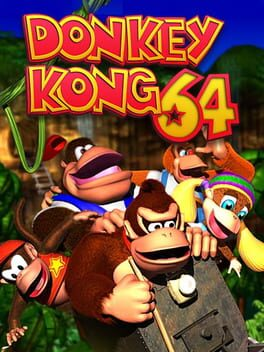
 In Donkey Kong's cabin hangs a picture of a dolphin. This is a reference to the code name of the Nintendo Gamecube, "Dolphin". The game was released before the Nintendo Gamecube was revealed, and is thought to be the earliest reference to the code name "Dolphin."
▲
2
▼
 Diddy Kong Racing DS is somewhat infamous for introducing the newly redesigned Tiny Kong, who despite being originally conceived by Rare as Dixie Kong's younger sister in Donkey Kong 64, was now depicted as a taller teenager. This design would carry over into future titles such as Donkey Kong Barrel Blast and Mario Super Sluggers.
 Contrary to popular belief, as revealed on a December 20, 2007 edition of Rare's Scribes, the decision to redesign Tiny into a teenager was not Rare's call, but Nintendo's, which is appropriate considering Nintendo retained full ownership of Rare's Donkey Kong characters since the latter company's acquisition by Microsoft in 2002, and thus have had full creative control over how those characters have been portrayed ever since.
One detail that is worth pointing out, and may provide an explanation to why Nintendo had no qualms with redesigning a character who was meant to be Dixie's younger sibling into a teenager, is that the Japanese localization of Donkey Kong 64 reportedly makes zero mention of Tiny being related to Dixie, instead just being described by the manuals as just a "Charming girl Kong". It's also worth pointing out that every game that has featured Tiny Kong since 2002, such as Mario Super Sluggers, Super Smash Bros. Brawl, and Super Smash Bros. for Wii U has also made zero mention of Tiny's relationship with Dixie Kong, which adds credence to the theory that Nintendo opted to ignore and essentially retcon Rare's initial lore of the two being siblings.
Rare Scribes on Tiny's redesign:
https://web.archive.org/web/20071224053939/http://www.rareware.com/extras/scribes/20dec07/index.html
Japanese wiki article on Tiny (英語版においては【クランキーコング】の親戚かつディクシーコングの妹という設定がある。 = In the English version, she is a relative of Cranky Kong and sister of Dixie Kong.):
https://w.atwiki.jp/nitendo/pages/1679.html
Japanese DK64 website that just describes Tiny as "charming girl kong":
https://www.nintendo.co.jp/n01/n64/software/nus_p_ndoj/chara/index.html
Gathering of Tiny's profiles and stats on Mario Wiki, notice how nothing after the western DK64 material mentions her relationship to Dixie:
https://www.mariowiki.com/List_of_Tiny_Kong_profiles_and_statistics
https://web.archive.org/web/20071224053939/http://www.rareware.com/extras/scribes/20dec07/index.html
Japanese wiki article on Tiny (英語版においては【クランキーコング】の親戚かつディクシーコングの妹という設定がある。 = In the English version, she is a relative of Cranky Kong and sister of Dixie Kong.):
https://w.atwiki.jp/nitendo/pages/1679.html
Japanese DK64 website that just describes Tiny as "charming girl kong":
https://www.nintendo.co.jp/n01/n64/software/nus_p_ndoj/chara/index.html
Gathering of Tiny's profiles and stats on Mario Wiki, notice how nothing after the western DK64 material mentions her relationship to Dixie:
https://www.mariowiki.com/List_of_Tiny_Kong_profiles_and_statistics
▲
2
▼
According to composer Grant Kirkhope, the DK Rap was written as a joke song that ended up being interpreted by audiences as a serious attempt at writing hip-hop. Consequently, he expressed confusion at the tongue-in-cheek cult following the song picked up decades later, noting that "bizarrely, this became its own thing now."
▲
2
▼
ASCII text reading "ICE KEY" is present in the ROM, a remnant of when Donkey Kong 64 was planned to be part of the Stop 'n Swap feature in several Rare games.
▲
2
▼
According to the game's Japanese website, K. Lumsy is King K. Rool's younger brother. This detail is not mentioned at any point in the English version of the game.
▲
3
▼
Based on an early version of the script, Snide was originally going to have a slightly different backstory and motivation for helping the Kongs. Rather than being King K. Rool's chief technician like in the final game, Snide was instead his personal handyman who grew frustrated that K. Rool wasn't letting him work on bigger projects such as the "Super Gun" (the original name for the Blast-o-Matic), eventually deciding to betray him. Notably, instead of mentioning time (in reference to the final level being on a time limit), Snide instead mentions the weapon having "weak points". It's unknown if this is based on an earlier version of Hideout Helm, or if it's just another way of describing the energy barriers, which are called weak points on the complete blueprint.
| keyboard_double_arrow_left keyboard_arrow_left | Page 2 of 2 | keyboard_arrow_right keyboard_double_arrow_right |
Related Games
Donkey Kong Country
Donkey Kong Barrel Blast
Donkey Kong Country Returns HD
Donkey Kong Country
DK: King of Swing
Donkey Kong Country 3: Dixie Kong's Double Trouble!
Donkey Kong Country 2
Donkey Kong Country: Tropical Freeze
Donkey Kong Country 2: Diddy's Kong Quest
DK Bongo Blast
Donkey Kong Land
Donkey Kong Country 3
Donkey Kong Country: Tropical Freeze
Donkey Kong Country
Diddy Kong Racing
Donkey Kong Racing
Donkey Kong Jungle Beat
Donkey Kong Country Returns 3D
Donkey Kong Country Returns
Donkey Kong
Donkey Kong Land III
Donkey Konga
Crazy Kong
Super NES Classic Edition
Game & Watch Collection
Donkey Kong Circus
Game & Watch Gallery 4
Super Smash Bros. Melee
Donkey Kong
Donkey Kong 3
Donkey Kong: Coconut Crackers
Mario Sports Mix
Super Smash Bros. Brawl
Super Smash Bros. for Wii U
Mario & Sonic at the Rio 2016 Olympic Games
Green House
Mario & Sonic at the Olympic Games Tokyo 2020
Donkey Kong 3: Dai Gyakushuu
Mario & Sonic at the London 2012 Olympic Games
Super Smash Bros. Ultimate
NES Remix
Mario Kart 8 Deluxe
Super Donkey
Donkey Kong no Ongaku Asobi
Game & Watch Gallery
Mario vs. Donkey Kong: Tipping Stars
Donkey Konga 2
Mario & Sonic at the Sochi 2014 Olympic Winter Games
Donkey Kong Land 2
Mario Strikers Charged