▲
1
▼
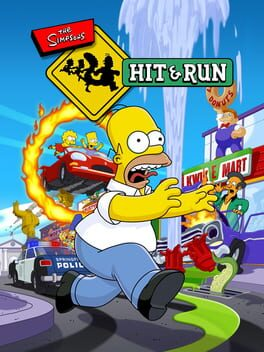
The development of The Simpsons: Hit & Run was influenced by a lawsuit filed by Sega alleging that The Simpsons: Road Rage too closely resembled Crazy Taxi. They eventually settled out of court, but this prompted developer Radical Entertainment to change the direction of its next Simpsons title from another vehicle-focused driving game to a fully open-world action-adventure game. Despite this shift happening late in development, they successfully integrated new mechanics like on-foot gameplay into the overall experience, though traces remained, such as the absence of enemies when on-foot, and the use of fade-to-black transitions for entering or exiting most vehicles to avoid creating more animations.
To secure the Simpsons license, Radical proposed an aggressive 16-month production schedule, which quickly proved unrealistic as they had no existing assets to build upon. The project fell behind before the first prototype was playable and missed multiple milestones, creating a stressful work environment marked by extended overtime and declining morale. Communication problems between departments reportedly caused internal builds to become so unstable that they were sometimes effectively unplayable for weeks. According to later accounts, Radical did not immediately inform Fox Interactive about the delays, but they disagreed over aspects of the game's design and content. Time constraints forced Radical to downsize levels and cut planned content, including two complete levels that still have remnants within the game's files, a food meter and turbo meter, and two boss battles. New bonus missions and collectible cards were introduced to replace or supplement the cut content, but even after these revisions, they needed more time to polish the game, and changes reportedly continued almost until release.
Meanwhile, publisher Vivendi Universal chose to minimize development costs for the GameCube version because of its comparatively smaller install base, assigning the entire port to lead programmer Cary Brisebois. With only a few weeks to complete the task, he successfully ported the game to the GameCube almost entirely on his own, although these constraints contributed to more unfinished elements and technical shortcomings.
To secure the Simpsons license, Radical proposed an aggressive 16-month production schedule, which quickly proved unrealistic as they had no existing assets to build upon. The project fell behind before the first prototype was playable and missed multiple milestones, creating a stressful work environment marked by extended overtime and declining morale. Communication problems between departments reportedly caused internal builds to become so unstable that they were sometimes effectively unplayable for weeks. According to later accounts, Radical did not immediately inform Fox Interactive about the delays, but they disagreed over aspects of the game's design and content. Time constraints forced Radical to downsize levels and cut planned content, including two complete levels that still have remnants within the game's files, a food meter and turbo meter, and two boss battles. New bonus missions and collectible cards were introduced to replace or supplement the cut content, but even after these revisions, they needed more time to polish the game, and changes reportedly continued almost until release.
Meanwhile, publisher Vivendi Universal chose to minimize development costs for the GameCube version because of its comparatively smaller install base, assigning the entire port to lead programmer Cary Brisebois. With only a few weeks to complete the task, he successfully ported the game to the GameCube almost entirely on his own, although these constraints contributed to more unfinished elements and technical shortcomings.
▲
2
▼
 According to leaked development files from The Simpsons: Hit & Run, Sideshow Bob and Poochie were originally planned to appear in the game. There is an unused low-polygon model for Poochie that is pre-posed, meaning that it was likely supposed to appear as merchandise of the character (most likely alongside Itchy and Scratchy's balloons in Level 2), rather than appearing in an Itchy & Scratchy cartoon cutscene. No models for Sideshow Bob are known to exist.
▲
1
▼
In the code for the "Alien Auto-topsy: Part 1" mission, there is a command called "AllowRockOut()" which can be triggered after collecting the nuclear waste barrel and parking the car while Homer is a passenger and someone else is driving (this can be performed while Homer is the driver, but is reportedly trickier to pull off). Homer can then be seen "rocking out" to the mission's music by performing the "Task Completed" animation over and over again (any other character animations will temporarily override it). However, if you cancel the mission during this animation loop, it will be revealed that the speed he rocks out at changes to accompany the tempo of the song that is currently playing. The RMS files (which control music events) contain tempo data for every song in the game, despite mission warping effectively causing rocking out to go unused.
▲
1
▼
Within the game's data is an unused conversation between Seymour Skinner and Agnes Skinner. It is about an answering machine message. This is the transcript:
Seymour: "You have reached the Skinner residence. Please leave a concise message at--"
Agnes: "Seymour! What are you doing?"
Seymour: "Recording an outgoing answering machine message."
Agnes: "Without my permission? You're grounded!"
A modified version of Agnes' last line here can be heard in Level 7's ghost playgrounds, but it is hard to hear.
Seymour: "You have reached the Skinner residence. Please leave a concise message at--"
Agnes: "Seymour! What are you doing?"
Seymour: "Recording an outgoing answering machine message."
Agnes: "Without my permission? You're grounded!"
A modified version of Agnes' last line here can be heard in Level 7's ghost playgrounds, but it is hard to hear.
▲
1
▼
Almost every playable character has unused voice clips that would have most likely played when they destroyed a wasp camera. Homer is the only one to use the voice clips, although it's actually used for destroying power couplings in the "Blind Big Brother" mission in Level 1.
▲
1
▼
There are three audio tracks in the game's files that are labeled "land_of_choc_main", "land_of_choc_end_neg", and "land_of_choc_end_pos". "choc" most likely stands for chocolate, and while this song is played during one of the game's missions, it does not involve chocolate, and neither does any other mission or area of the game.
However, the song was later used in the introductory cutscene to the level "The Land of Chocolate" for The Simpsons Game.
However, the song was later used in the introductory cutscene to the level "The Land of Chocolate" for The Simpsons Game.
▲
1
▼
 The main menu will feature one of three holiday themes if the system's clock is set to specific days of the year:
• October 31st - Halloween
• Last Thursday of November - Thanksgiving
• December 25th - Christmas
Related Games
LEGO Dimensions
The Simpsons Game
The Simpsons Wrestling
The Simpsons Game
The Simpsons: Itchy & Scratchy in Miniature Golf Madness
The Simpsons: Road Rage
The Simpsons Skateboarding
The Simpsons Game
The Simpsons Game
The Itchy & Scratchy Game
The Simpsons Arcade Game
The Simpsons: Bart vs. The Space Mutants
Virtual Bart
The Simpsons: Tapped Out
The Simpsons: Road Rage
Robert Ludlum's The Bourne Conspiracy
Prototype
The Bard's Tale
Scarface: The World Is Yours
Homeworld
F.E.A.R.
The Lord of the Rings: The Fellowship of the Ring
SWAT 4
Arcanum: of Steamworks and Magick Obscura
Crash Nitro Kart
Half-Life
Crash Twinsanity
Hulk
Team Fortress Classic
Crash Landed
Spyro Orange: The Cortex Conspiracy
The Legend of Spyro: The Eternal Night
Half-Life: Decay
Mario's Time Machine
The X-Files: Resist or Serve
Die Hard: Nakatomi Plaza
The Legend of Spyro: A New Beginning
Crash Tag Team Racing
Die Hard: Vendetta
Crash of the Titans
Leisure Suit Larry: Magna Cum Laude
Spyro: A Hero's Tail
50 Cent: Bulletproof
Crash Boom Bang!
The Legend of Spyro: A New Beginning
The Legend of Spyro: The Eternal Night
Crash Tag Team Racing
F.E.A.R. Perseus Mandate
Half-Life 2
Crash: Mind Over Mutant