Viewing Single Trivia
▲
1
▼
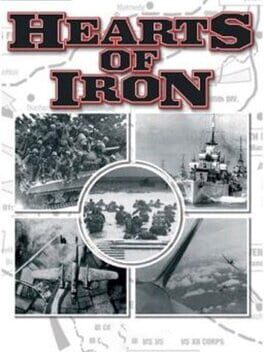
In 2004, the Peoples' Republic of China banned Hearts of Iron for "distorting history and damaging China's sovereignty and territorial integrity" according to the Ministry of Culture. Specifically, this was due to Manchuria, West Xinjiang, and Tibet being portrayed as independent entities, and Taiwan being portrayed as a Japanese territory, in accordance with their respective historical boundaries during World War II when the game takes place. However, the Peoples' Republic of China has claimed long-term recognition of these territories as expanded provinces for varying reasons over the years while opposing numerous independence movements, leading to demands from the Ministry of Culture to immediately prohibit the game in mainland China.
Comments (1)
You must be logged in to post comments.
Related Games
Wu-Tang: Shaolin Style
Robin Hood: The Legend of Sherwood
FlatOut 2
Plants vs. Zombies: Garden Warfare
Guitar Hero: Aerosmith
Street Racing Syndicate
Mixtape
Alice: Madness Returns
Metal Gear Solid V: The Phantom Pain
Reincarnated
Mass Effect
Myth Makers: Trixie in Toyland
Dusk
Monster Truck Madness 2
Gubble Buggy Racer
Revelations: Persona
Security Breach: Fury's Rage
Burnout Paradise
Sid Meier's Pirates!
Nobunaga's Ambition: Awakening
Need for Speed: Underground 2
Double Dragon Advance
ClueFinders: The Incredible Toy Store Adventure
Half-Life 2
Samurai Shodown II
Chessmaster 9000
Bridge Project
Driver
WWE 2K22
Everything
Sonic Robo Blast 2
Resident Evil 4
Putt-Putt Saves the Zoo
Command & Conquer: Red Alert
1979 Revolution: Black Friday
Robot Wars: Arenas of Destruction
Glover
SpongeBob SquarePants: Revenge of the Flying Dutchman
Disney Magic Kingdoms
Horizon Zero Dawn
Mafia
Metal Gear Solid 2: Substance
Resident Evil Survivor
Art of Fighting 3: The Path of The Warrior
Sonic Superstars
Strong Bad's Cool Game for Attractive People
Milano's Odd Job Collection
Manhunt 2
New Trivia!
Marvel vs. Capcom: Infinite
Divekick
- Tibet declared independence in 1912, shortly after the fall of the Qing Dynasty, and while its independence was never formally recognized (with the Republic of China still claiming it as its territory), it was functionally its own country until the People's Republic of China reannexed it in 1951. Both the PRC (i.e. Mainland China) and the rump ROC (i.e. Taiwan) maintain the stance that Tibet was always part of their China.
- West Xinjiang, a.k.a. East Turkestan, briefly claimed independence from 1933 to 1934 and from 1944 to 1946, the second time with the initial backing of the Soviet Union. Both attempts ended with the polities being reabsorbed into the ROC.
- Manchuria and Taiwan were both seized by the Empire of Japan and held until the end of World War II. The former was captured in an invasion and turned into the puppet state of Manchukuo, while the latter was forcibly ceded to Japan after the first Sino-Japanese War.
- Additionally, all of these territories are the subject of ongoing independence movements that the PRC government strictly opposes (as a side note, the ROC also opposes the Taiwanese Independence Movement, which asserts that Taiwan should be a new country rather than either a PRC territory or the ROC's rump state).